Food waste: the app that saved 157 million meals in a year
No patents, no complex technology: a smart idea that turned a huge problem into a benefit for everyone
A simple idea, a perfect mechanism
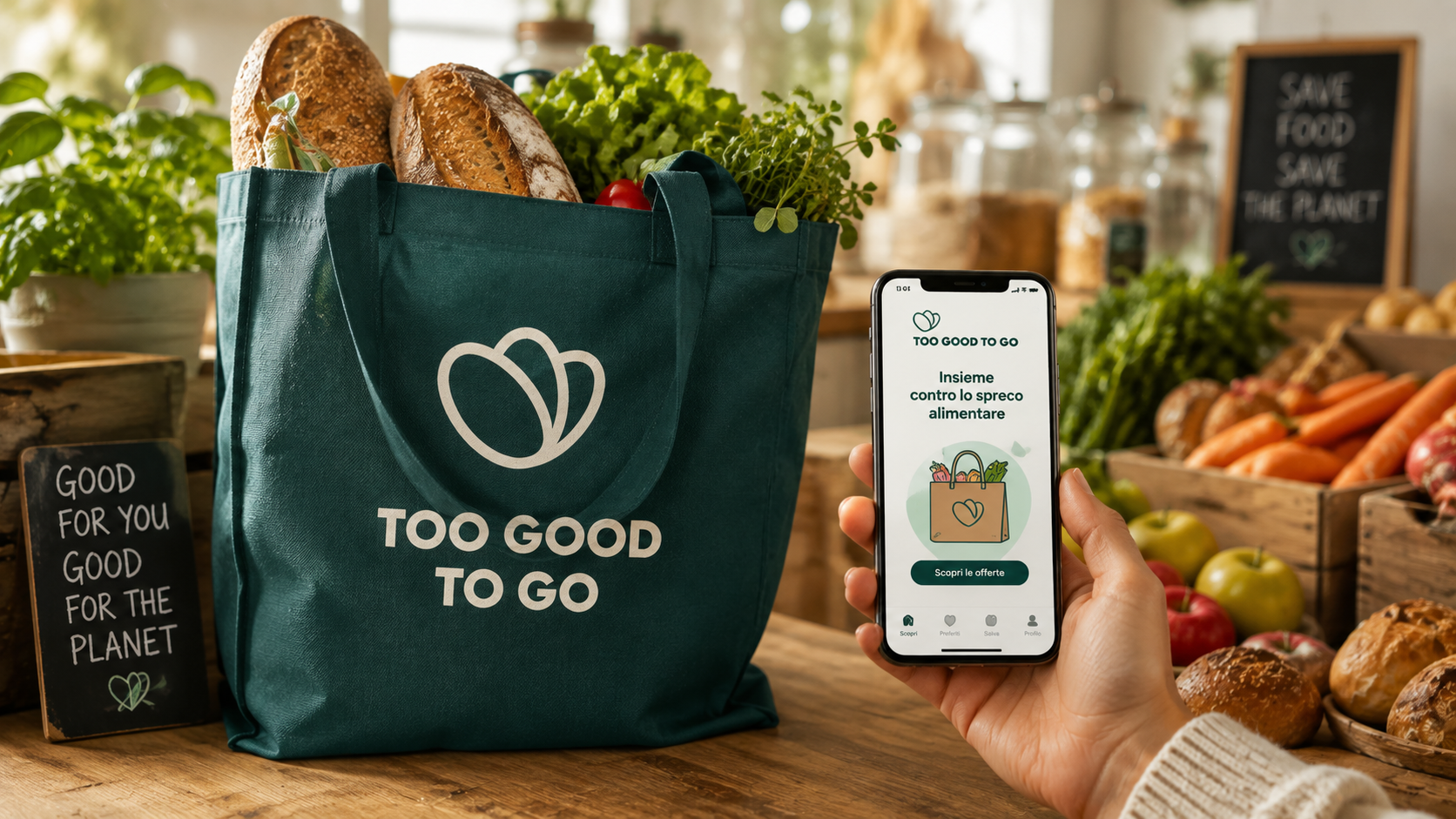
Too Good To Go, founded in Denmark in 2015, built exactly that connection. The mechanism can be explained in one sentence: bars, bakeries, restaurants and supermarkets list a surprise "bag" on the app containing that day's unsold items at around one third of the price; whoever books it comes to pick it up before closing time. That's it. No hardware, no proprietary logistics, no warehouses: the food, the shops and the people were already there — all that was missing was the connecting infrastructure.
The genius lies in the incentive structure, because in this model all three parties win. The shop turns a cost (disposing of unsold items) into revenue, while also gaining new customers. The buyer takes home quality food at a fraction of the price. And the environment is spared the waste of all the resources already spent to produce that food — soil, water, energy — ending up in landfill along with new methane emissions. When a model asks no one for sacrifices but delivers benefits to everyone, it doesn't need to persuade: it only needs to be known. It's no coincidence that the app grew for years almost entirely through word of mouth.
Numbers behind an impact you can measure
The result, ten years on, is documented in black and white: according to the company's Impact Report, in 2025 alone more than 157 million meals were saved worldwide — nearly 300 per minute — and 7.8 million meals in Italy, representing 13% growth in a single year. Every meal saved also means CO₂ avoided, water conserved, and soil protected: the environmental impact here is not a slogan, it's an accounting record.
It's worth pausing on one detail: from the very beginning, the company chose to measure and publish its figures in an annual report. This is a lesson within the lesson: impact that isn't measured remains an opinion; impact that is measured becomes an asset — it convinces partners, motivates people, and attracts those who want to contribute.
What it teaches those who want to make an impact
The Too Good To Go story dismantles the most common excuse in the ecological transition: "you need large capital and technologies we don't have". Here the technology is an app like many others; the initial capital was minimal; the decisive talent was not an engineer but an intelligent design of the problem — reformulating "how do we waste less?" into "how do we connect those who have with those who want?". This is the type of sustainable innovation accessible to any company and any professional: looking at a waste stream — food, energy, materials, space, time — and asking who, nearby, would consider it a resource.
For businesses, the message is that the most profitable sustainability projects often add no costs: they eliminate waste that is already being paid for. For talent, that in the green economy there is room for every skill — design, marketing, data, operations — because ideas like this need all of them. And for both, that real impact always starts the same way: from a problem seen with fresh eyes, and from a number that proves its solution.
Do you have an idea or a talent to put at the service of the transition? On Simbial discover how to turn it into concrete projects, together with companies looking for exactly that.